
Doom (2016) – 10 years later
Yep, Doom 2016 is a decade old now. Time flies. Click here if you want to skip to my thoughts. Also I spoil the game a lot.
Doom, retro shooters, and me
I mean, it’s Doom, id Software’s seminal title from 1993 that influenced everything else. What’s more to be said?
I was born a few years after the original Doom released. I never had the chance to play it as a young’un, nor would I know anyone who did. But with the internet being a thing, and growing up on [now-dead] gaming forums, I’d become accustomed with the classic shooter.
I first played Doom sometime in 2010, and I loved it. Compared to all the other first-person shooters I played, this was different. There’s no narrative faff, no tutorials. Just you, guns, and a bunch of enemies in the each room. The levels were confusingly labyrinthine, but it was still fun to trawl about like a rat in a maze. And then in the second game you get a bigger, badder shotgun to melt demons with. What’s not to love?
… Also it was that small & lightweight that I could put it on a USB stick and play it on the busted school computers. Somehow I passed GCSE ICT!
Ultimately it was Doom that introduced me to the world of retro FPS games and how carefree they felt; their arsenal of distinct weapons, arcade-like health & armour pickups, scattered secrets, and of course each one’s roster of freaks and enemies to blast through. Thanks Doom.
Setting the stage for 2016
Of all the games to set the stage with, it’s 2007’s Call of Duty 4: Modern Warfare. Its cinematic take on the contemporary war on terror – with all its moral murkiness – took the world by storm. And of course, everyone wanted to copy its success.
As the 2010s rolled around, you couldn’t escape the Modern Military Shooter. The market was inundated with the same US Special Forces vs vague Middle-Eastern terrorists, the same deserts, and the same gameplay mechanics: regenerating health, two-weapon limits, aiming down sights, and limited sprinting. Scripted sequences were rife, and you’d be lucky if they had any colour outside of brown & grey.
Amidst the malaise of late stage Modern Warfare clones, something was brewing in opposition: the Retro FPS Revival, which arrived in two fronts.
The first was ports; re-releases of old games, often with quality-of-life features like widescreen support. The rise of digital distribution platforms allowed publishers to reissue their back catalogue to a wider audience without the faff of physical retail costs, and it did wonders for re-establishing classic titles.
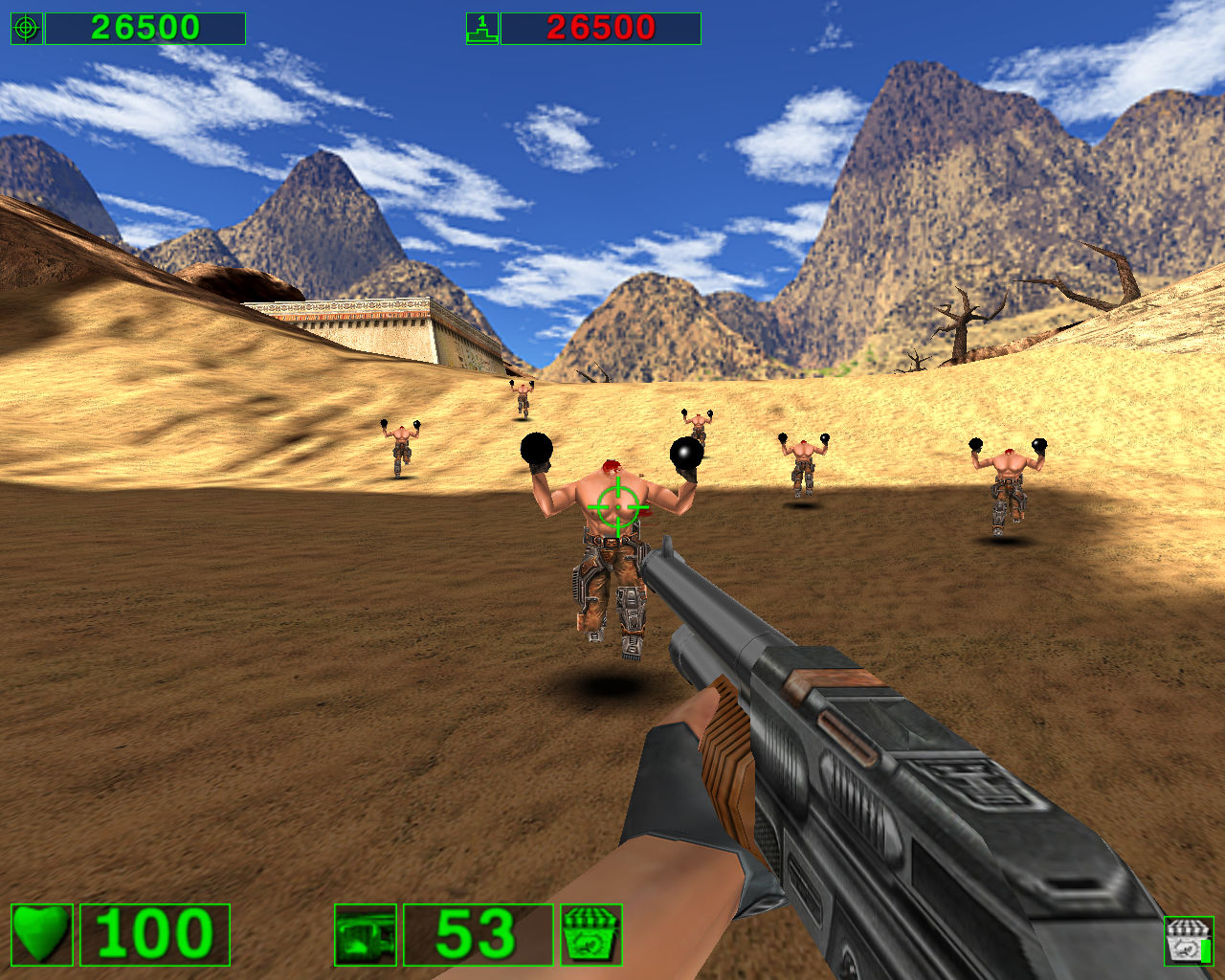
The second front was, well, new games. What better way to get eyes on an old franchise than to make a new game for it?
It took some time for these to find their footing, a lot of old FPS design – namely the labyrinthine levels – just wouldn’t work today. There was a balancing act between retro practices, modern shooter standards, and trying something new altogether. Too retro and only old-time nerds world play it, too modern and it’d lose its appeal, too new and it runs the risk of losing its identity.
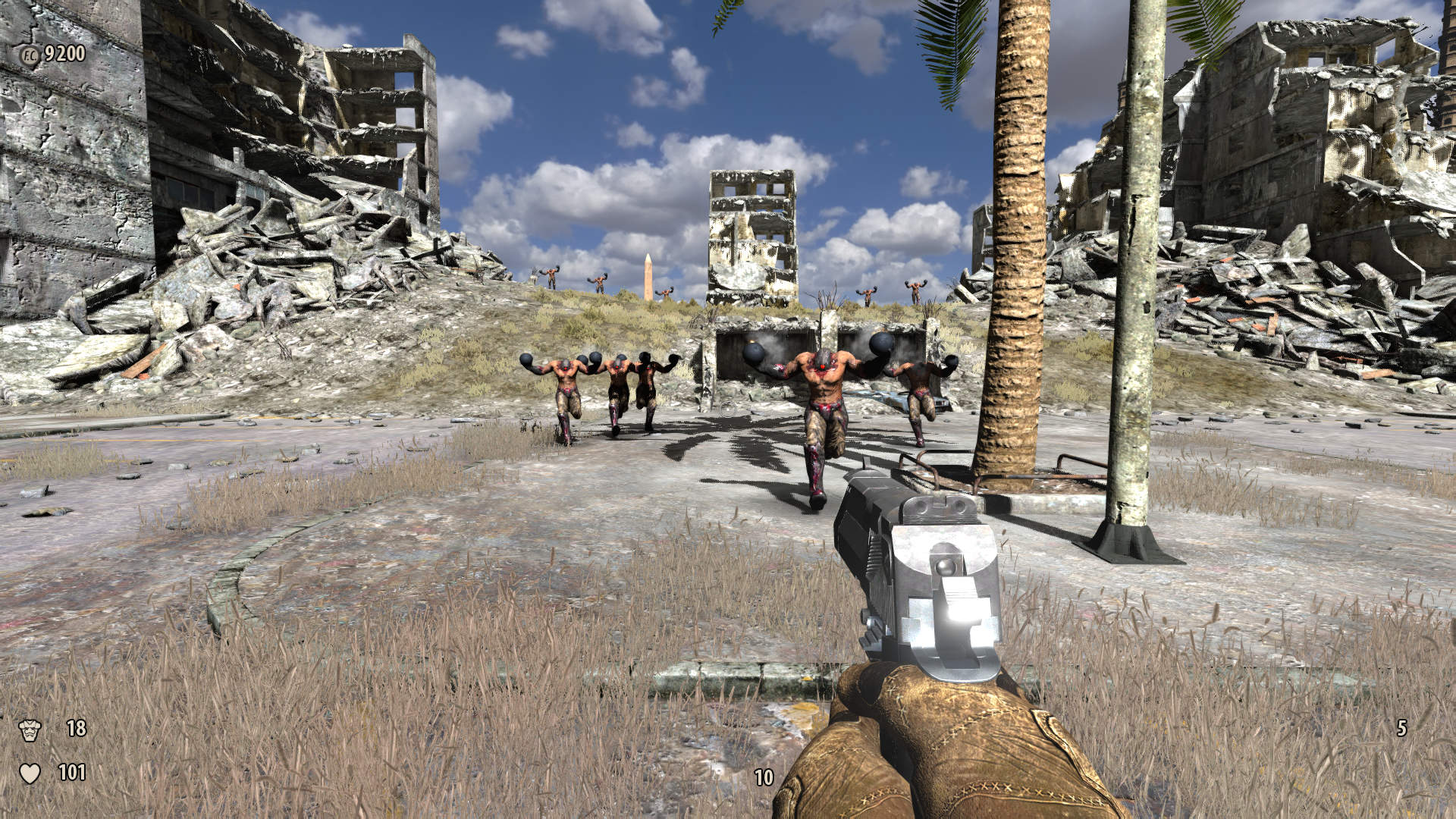
2011’s Serious Sam 3 and Duke Nukem Forever took multiple cues from modern shooters in their hopes to be the best of both words. Neither of them were better. 2013’s Rise of the Triad was appreciated for being like its classic incarnation, but didn’t get far.
Ultimately it was 2014’s Wolfenstein: The New Order which made it big. Releasing to critical acclaim, and somehow merging a heartfelt narrative with chaotic Nazi-slaughtering, it struck the perfect balance – and was the final proof that retro FPS series could make it big.
For the record, the last Doom game – Doom 3 – released all the way back in 2004. While it kept the iconography of the series and was a technical marvel, its focus on horror made it the black sheep of the series. Fans were yearning for a return for form, and the retro FPS revival had hopes riding high.
If there’s one final thing to note here, it’s that Doom managed to stay relevant due to its community, who worked wonders with keeping the game alive. From custom source ports which allowed users to play the games on modern systems, to its wide array of modders creating custom content, life was constantly pumped into classic Doom while so many other games faded into obscurity.
The Doom we never got
In mid 2008, id Software made a surprised, yet subdued announcement: Doom 4 was in development. This was followed by complete radio silence. The most we got in this period were leaked environment screenshots and character models in 2012.
In 2013, Jason Schreier broke the news: behind the scenes at id Software, Doom 4 was a wreck. Internal mismanagement and miscommunication was rife, and the project had ground to a halt amidst creative indecision, before being rebooted.
The version of Doom 4 that was cancelled was… Not what fans would’ve wanted. From the little we know of it – most of it from a stellar /noclip documentary – it would’ve panned out like the many Modern Warfare clones, with a heavier focus on cinematic scripted sequences than actual raw gameplay. It got to the point where the devs teasingly referred to it as Call of Doom.
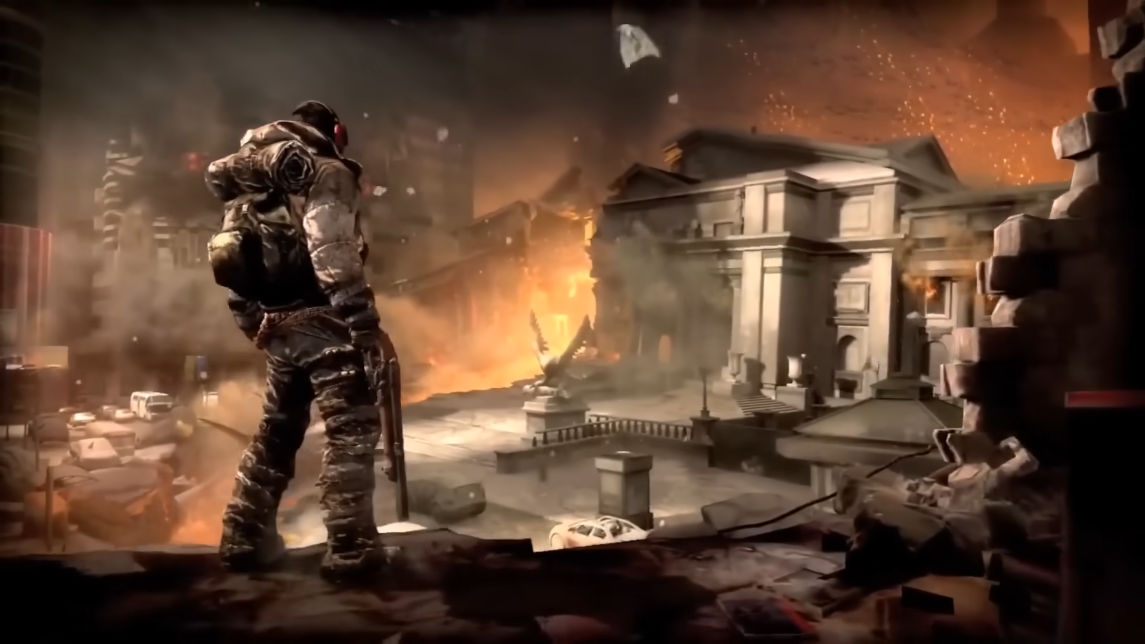
Looking at the footage we have available, a leaked trailer, a few gameplay cuts, and some animation tests, this iteration of Doom looks… Bland. While the idea of a fully realised, down to earth take on a demon invasion – Hell on Earth, if you will – could’ve been captivating, the gameplay wouldn’t have been Doom.
The project was scrapped in 2011, and after some internal rejigging, id Software put all their efforts working on the Doom we know today.
The big reveal
Actually, it starts with a small reveal. In 2014 we got the first teaser, a vague synopsis with a haunting narration, alongside beauty shots of the new Cyberdemon. It wasn’t much, but it was proof they were cooking.
That July, they previewed the game to a private audience at Quakecon, all while keeping the rest of us in the dark1. id announced that they’d showcase the game publicly at next year’s E3, so while we waited we chewed on reports of what was shown,
After a painfully long year… We got another tiny reveal: three seconds showing off both the Super Shotgun, and the new Revenant. It was a nice jolt, and it got us excited for E3.
Then it happened. The big reveal. E3 2015. We saw the the guns, the explosions, and demon-tearing glory. We saw finishing moves reduce demons to a puddle of viscera. Localised enemy gibs. The black humour – removing a corpses’ arm and using the hand to bypass a security lock. An ancient decrepit hell seeped in sulphurous atmosphere. THE BFG. It was glorious,and the game looked beautiful. All of us watching at home were cheering on alongside the crowd.
And that was just the singleplayer. We also got to see the new arena multiplayer, as well as SnapMap – a new level making tool. Doom was back, reborn for the modern age. It was what we were waiting for.
Marketing hell, doomed to fail
You’d think that with what I said about the E3 reveal that we were hyped for the new Doom. Sure there was excitement and buzz, but it died down nigh-instantly. For all the talk of the game being “really, really fast”, the demo was anything but that. It was awkward, stilted, slow – played by someone struggling to aim with a controller.
And then there’s the enemies. They looked amazing, and reducing them to a bloody mist seemed fun… But there were obvious moments where the AI was dumbed down: either they stopped attacking, froze in place, or aimed everywhere but the player.
These seem like minor slights, every E3 presentation is faked & scripted to a degree, but it painted a concerning picture. It felt like they didn’t have confidence in their own game, and instead of using the rest of the year before release to clear things up, we entered the slough of despair. We wouldn’t see any more footage of the singleplayer for 8 months.
It’s February 2016. We’re three months away from launch. Instead of another reveal that would boost hype, we got Conan O’Brien (and some American Footballers) awkwardly stumbling through the game. It was painful.
Oh yeah, at this point they gave the game the most generic looking box art. To try and cover it up they presented two alternate covers used on the inside sleeve, and put them to a vote on Twitter. Everyone rallied around the sick homage version, but the damage was still done, Doom’s main box art was still naff.
With the fans being concerned about the state of the game, do you know what we had next? A streamed multiplayer tournament with gamers teaming up with athletes. Really. At least the amazing ‘Fight Like Hell’ trailer released a few days later.
April saw two beta multiplayer tests, with one of them only for those who pre-ordered Wolfenstein: The New Order2. The second was open to everyone – but it didn’t answer the one question we all had: would the singleplayer be good?
It’s the end of April. Spirits are low. The game was two weeks away and we resigned to the fact that Doom was going to be bad. Why else would they put so much focus on the multiplayer mode instead of revealing more of the singleplayer?
And then it happened.
MUST WATCH DOOM 4 LEAKED TRAILER
Zenimax had fumbled the game’s marketing so hard that a half-finished leaked trailer produced more excitement for the game than anything else. Even if it was incomplete, this trailer had one thing behind it that was evident: raw passion3.
A week later we’d get the actual launch trailer, which had some differences. Namely where did the big robot dude with the laser sword go? But still, there was only a week to go, and the hype train was back on track.
When I look back on the long wait for Doom, I only have one thought: it felt like Zenimax were sabotaging the game with their poor advertising. When the only footage of the main game we saw was poorly played, and the rest of the reveals went to an awkwardly-received multiplayer mode, what else were we to think? The fact a leaked trailer produced more excitement than anything else was mental.
Welcome to Hell
After a long wait, Doom finally released. It was different, it was fun, and while it was a far cry from the original 1993 game, it still felt like Doom. And 10 years down the line, it still feels like a worthy successor. And sitting here writing this, I have no idea where to start.
The original Doom is ridiculous. Born out of Aliens, thrash metal album covers, and released in the midst of the Satanic Panic; it’s premise is as much of a hotchpotch as its inspiration: you’re a space marine stranded on mars forced to fight demons after megacorp UAC opens a portal to Hell. In the first 5 minutes of the new Doom, you find out nothing’s changed:
A perfect prologue
I won’t detail everything about the game, but you have to know how the first 5 minutes of the game nails it, and sets the expectations for the game ahead.
The game starts with a black screen, a glowing sigil forming in the darkness. An eery echoing voice lays it out plain:
They are rage, brutal without mercy. But you. You will be worse. Rip and Tear4, until it is done.
8 seconds later, you’ve broken out of a stone sarcophagus and are now shooting zombies. The room you’re in is futuristic & angled, with a blood-soaked floor and gothic candles. The contrast makes it clear: this is Doom.
We also get our first glimpse of a narrative (overt narrative in a Doom game? Shock! Horror!). A hologram recording fills the room, UAC researcher & demonic cultist Olivia Pierce – our antagonist – stands by your sarcophagus, remarking how you must be contained.
Next room. Suit up and check the monitor next to you: DEMONIC INVASION IN PROGRESS. It’s absurd, and made better by the fact the game is treating it 100% seriously. You know you’re in for a treat.
A gravelly, modulated voice cuts through the monitor. Head honcho Dr. Samuel Hayden minimises the demon threat. You minimise the conversation by throwing the monitor across the room.
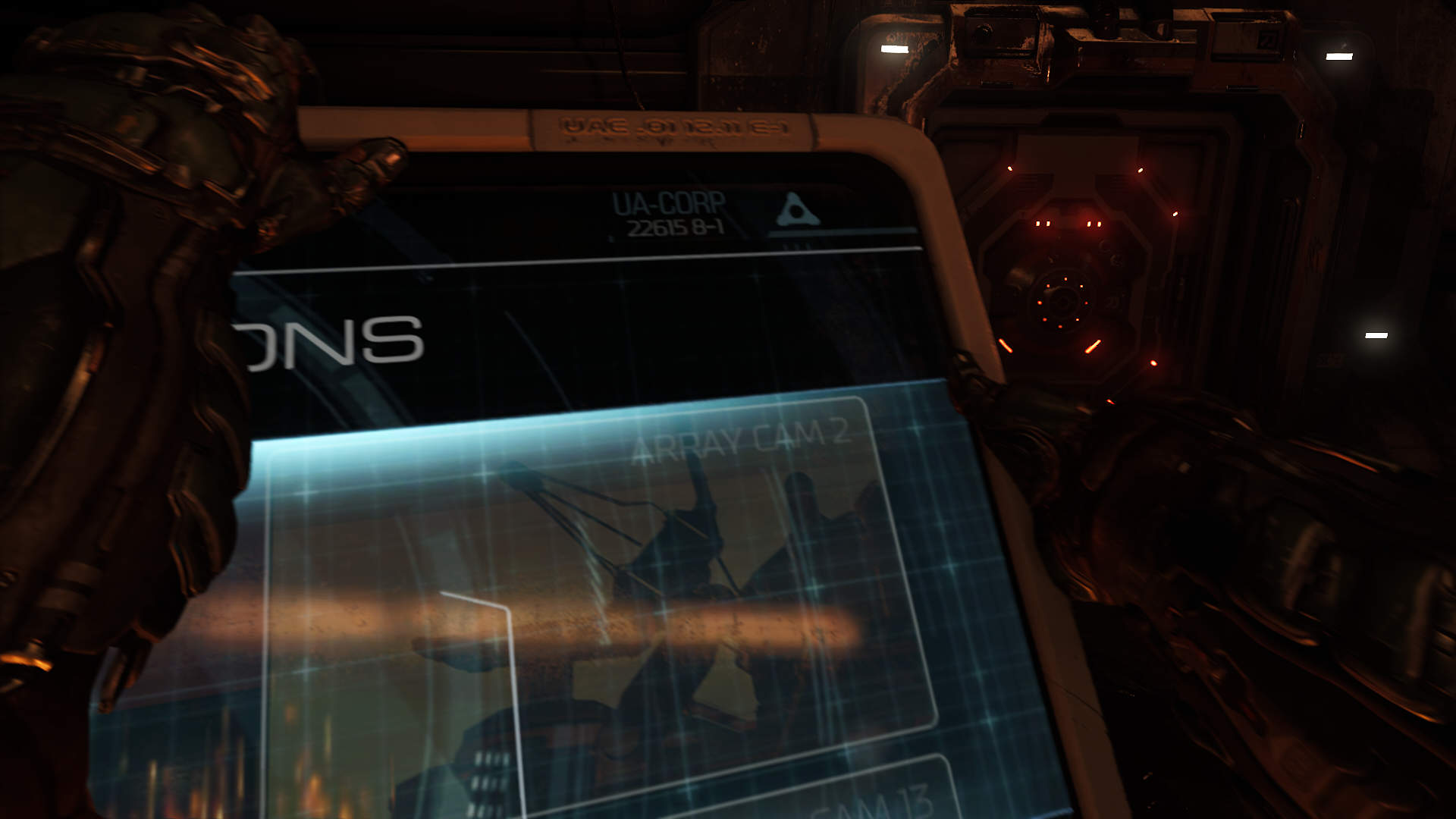
Down the corridor. Here you get introduced to the glory kill mechanic – this game’s signature. If you damage an enemy enough to stun them, you can perform a grisly finishing move to recover health. Your first proper combat challenge is in the next room, grab the shotgun from a nearby corpse, and go shoot up some Imps.
You notice that the game is a tad more sequential than classic Doom. You’ll roam through areas with some loose enemies, then be funnelled into a closed arena where they spawn in. There’s also a surprising amount of verticality in this game, and enemies are no slouch. Imps are now fast little buggers, climbing and clambering all over the walls. When they’re not lobbing fireballs at range, they’re digging their claws right into you.
After your first taste of combat, you head to the elevator. Another Olivia hologram utters how you must never break free. The first 5 minutes of this game and it all comes of naturally.
On your way to the Martian surface, Hayden chimes in through the intercom. He makes claims that interfering in Hell was “for the betterment of mankind”. The corpse at your feet begs to differ. The E1M1 riff ratchets up. As he tries to justify it all. Fist meets intercom. Cue title.
It’s an exquisite introduction to a game. In 5 minutes alone you know everything about how it plays, each characters’ goals, and the general vibes. It’s tightly packed, and lets you get to the action of the game immediately with little fuss. You get a feel for how story is delivered, how exploration is handled, and how frantic combat gets.
If there’s something I need to iterate, it’s Doomguy’s characterisation. Despite being a mute FPS protagonist, you get a clear sense of who he is from his actions alone. Throwing the monitor, destroying the intercom. He holds Hayden in contempt for interfering with Hell, and his justifications only frustrate him. It’s beautifully done, and his lack of care for UAC property becomes a running theme.
Wot I think
Doom 2016 is hectic, challenging, and overall fun. It fantastically merges what we loved about the classics with 20+ years worth of tech enhancement and gaming standards built up since then. It’s fresh, confidently stands on its own legs, and feels like a worthy successor to Doom.
When Doom launched a decade ago, I was ecstatic. After a year of both hype and expecting failure, the game blew me away. I thoroughly devoured it in two sittings, labelled it game of the year 2016, and kept it in my head as an all-time favourite. But a decade down the line my impression of the game has faltered.
Doom is still great, I’d give it a solid 8/10 any day of the week. It’s frantic, beautiful, and fun. Removed from the excitement of oh my god a new Doom game and it’s awesome, the games flaws become more apparent to me.
Armoury
It’s Doom. Combat is intense, and every element about the game is built up to make it fun. You’ve got your full arsenal of Doom weapons, and much like the classic game each weapon performs a distinct role in combat.
I’ll note that the Chainsaw takes on a different role. Functionally it’s acts the same as a glory kill, locking you in place and showing a vicious demon-killing animation. Whilst glory kills restore health, the chainsaw restores ammo, which is useful in a pinch. It does have limited ammo itself, mind.
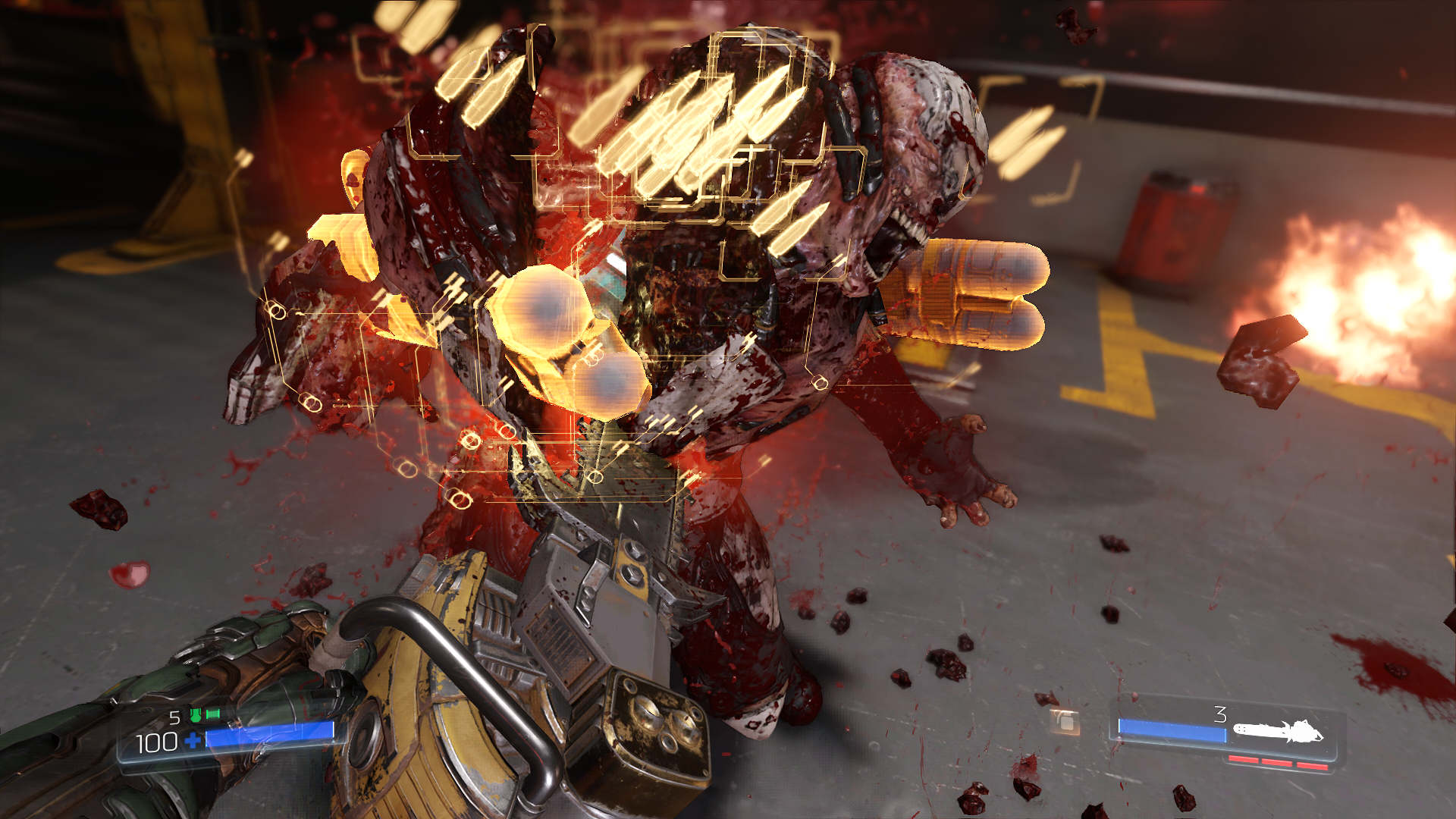
The BFG is back, and it’s glorious. Even has it’s own panic button assigned to it. Mechanically it’s the same as Quake 2’s BFG, and that’s not a complaint at all. If you’re in a tight spot, just press T and reduce everything in the room to a red mist.
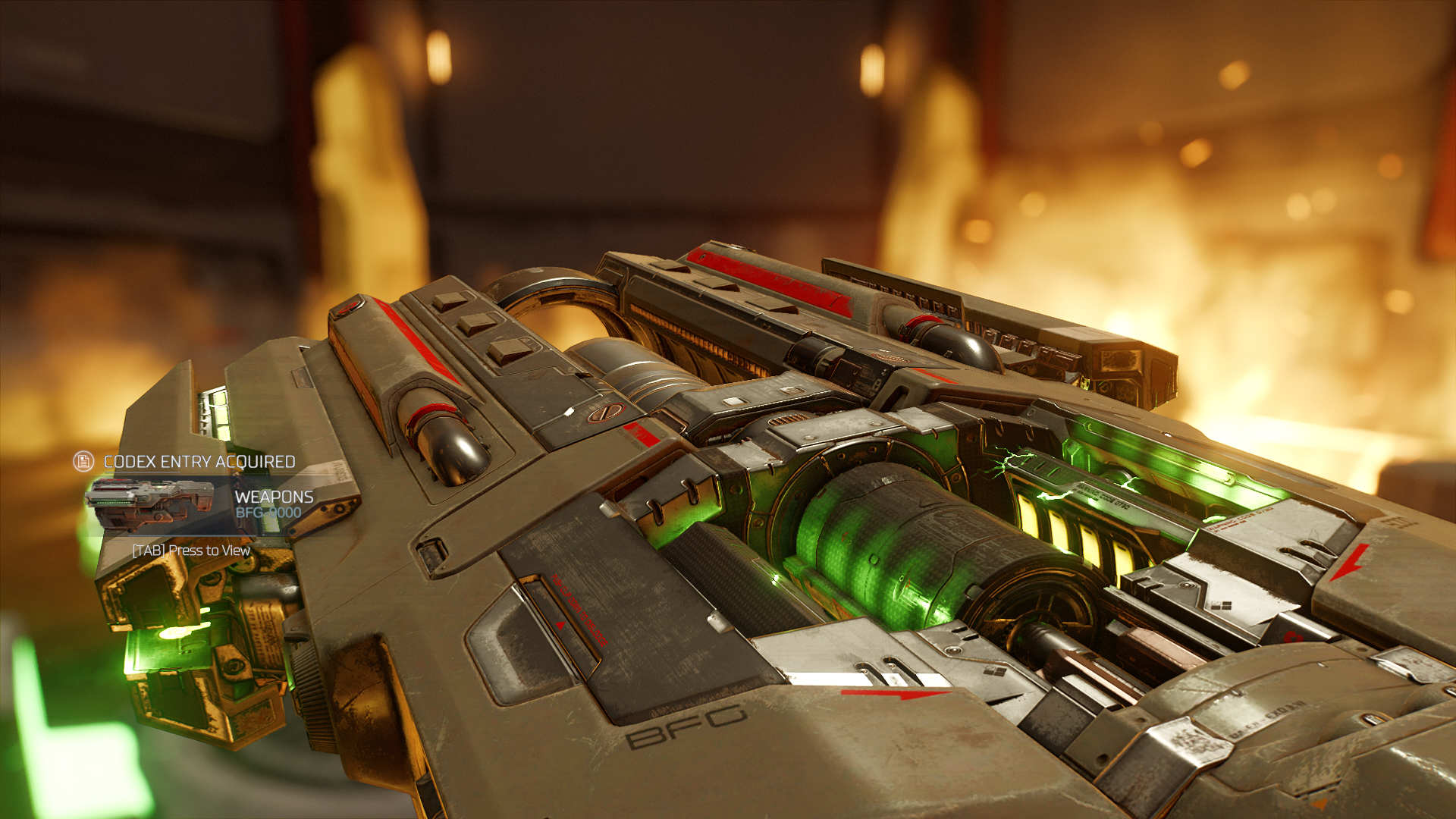
There are also two new additions to the roster too, both of which fill a missing niche:
- The Heavy Assault Rifle deals consistent chip damage regardless of range, whittling down enemies health. With the Chaingun now requiring an extensive spinup before firing, the rifle works as a lighter alternative in a pinch.
- The Gauss Cannon is this game’s answer to Quake 2’s Railgun. It’s big, meaty, and fires a devastating precise beam. It also knocks you back with each shot – that’s how powerful it is.
On top of that, all weapons (barring the BFG) feature unlockable upgrades. These upgrades add alternate firing modes and extra functionality; things like grenade launchers, stun blasts, and tracking missiles. They add so much more to these weapons, and open up what you can do.
It’s not just weapons you can upgrade, you also get two extra ways to upgrade your armour: occasionally you get the chance to boost your max Health/Armour/Ammo, and frequently you get points to extend your armour’s functionality.
And also as a final upgrade, you have Runes, equipable modifiers for combat – like improving jump movement, quicker glory kills, etc. You’ve got to explore and discover where these runes are, and as the game progresses you can equip up to three of them.
Oh, and I can’t forget the equipment. It’s not much, but over the course of the game you get additional items with unlimited use, but a recharge between each use. A frag grenade, hologram decoy for distracting enemies, and a siphon grenade which steals health. It’s not much, but these additions perfectly round off your weapons.
Also because I can’t put this anywhere else: the glory kill system is neat. It gives you a few seconds of respite from combat, and the health rewards incentivizes you to push forward in combat for more.
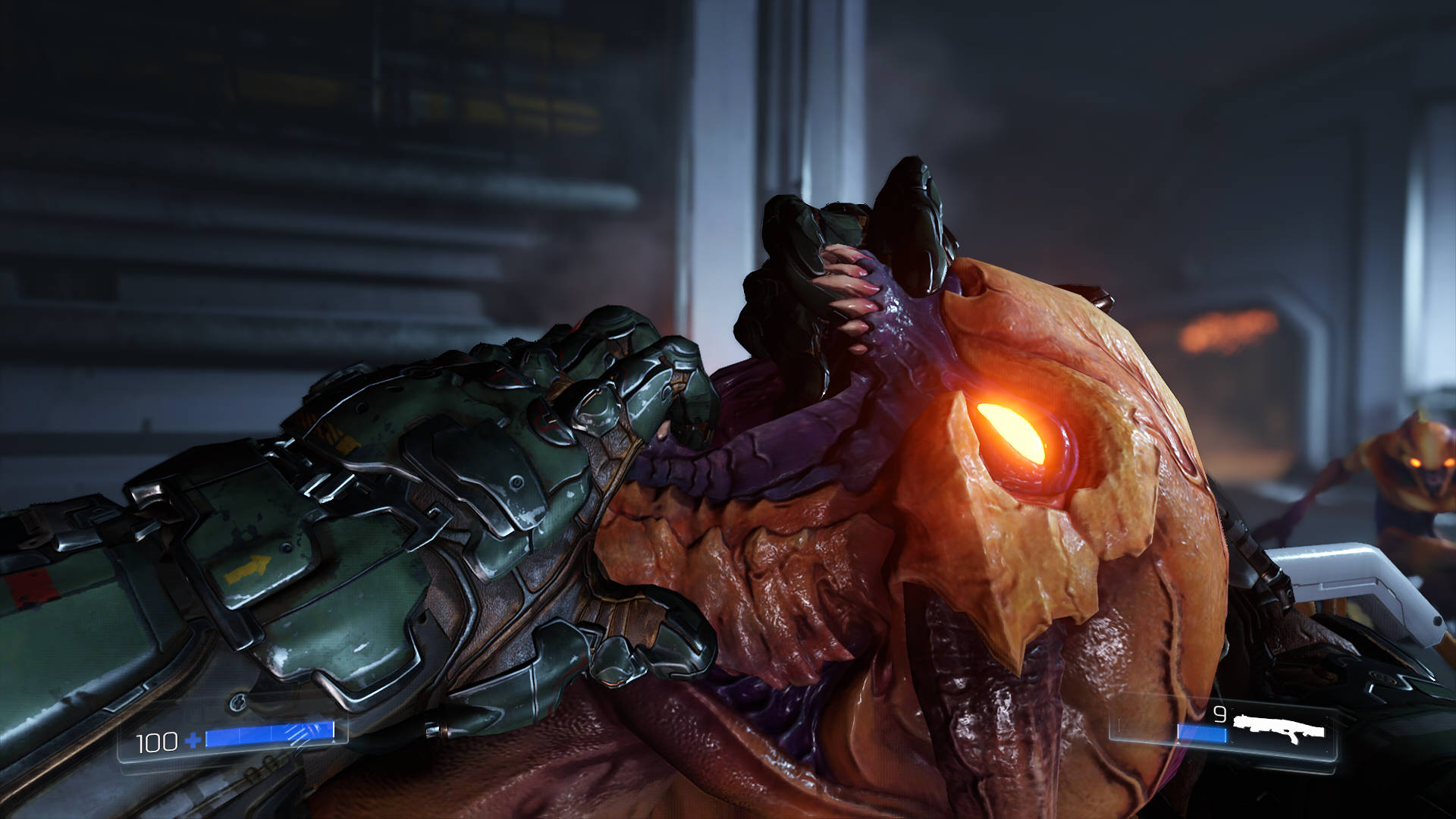
Do power-ups count for as part of your armoury? Not only do they return from classic Doom, but they also added a few new ones to spice things up. You can find them scattered around certain arenas, and they often come in handy.
- Invulnerability – Does exactly what it says on the tin.
- Beserk – Returning from classic Doom, this iteration is a lot more devastating. Performs swift, punchy glory kills.
- Haste – Move fast, jump fast, shoot fast.
- Quad Damage – hailing from the Quake games, you deal 4x more damage. Melt enemies in a single shot, just watch for splash damage!
But despite everything, I struggle with how weapons feel. They often seem underwhelming. The only one that has any punch to its firing sound is the Gauss Cannon. On top of that, it’s hard to quantify how much damage you’re actually doing; sure the Rocket Launcher obliterates lesser demons, but anything larger than an Imp feels like a bullet sponge. Your weapons feel weak.
It’s a problem that the classic Dooms have to a degree, but with their simpler combat, you get used to things quicker. You quickly figure out that six shotgun blasts take down a Cacodemon, you know?
And then there’s the upgrades. Yeah they’re all cool, but the sheer amount of them – and how you get them – often distracts from the game itself.
- Combat Support Drones – Weapon unlocks
- Completing mission challenges & killing enemies – Weapon points to upgrade weapon unlocks
- Dead UAC Elite Guards – Praetor Suit upgrade points
- Argent Cells – Increase your Health/Armour/Ammo caps
- Rune trials – Unlock gameplay modifiers
- Rune challenges – Accomplish specific actions with a rune equipped to increase their effects
While you can get a decent amount of upgrades & points by just playing the game, these unlocks require you to actively explore the map for secrets (I wouldn’t find it that bad, but many upgrades are locked off as you progress through each level). And completing random challenges for weapon points isn’t something I’m a fan of. Both of these take me out of the game, and stop me from being able to play comfortably.
I get it though, they add so much depth to the game. If you had it all from the start you wouldn’t feel any progression, and if it was omitted completely the game would get stale for most folk. And to be fair, mixing and matching all the upgrades makes the game feel as fresh on a replay.
Thankfully, the game offers an arcade mode. You start the game with all upgrades, and the goal is to kill everything quickly and as cool as possible. It would be a nice antidote, but its focus on accruing points with each kill is something else that takes me out of the game.
Glory kills present another issue. Because they reward you with more health for performing them, you’re incentivized to do them all the time. Combined with the runes that 1) make glory kills easier, 2) increase the glory kill range, and 3) give you a speed boost, you find yourself running about constantly spamming F rather than strategising about what to do in combat.
Runes also provide ways of becoming ridiculously, borderline unfairly overpowered with certain upgrades. For instance, the triple-barrelled Turret Mode for the Chaingun can be upgraded so it doesn’t need cooling down – combined with a Rune that gives infinite ammo when you have 100 armour, you melt everything in your path.
Monsters & fighting
Combat is wild. I surprisingly have little to say about it, but I’ll mention this. Levels & arenas have a remarkable amount of verticality. Ledges, platforms, tunnels. Later levels add jump pads and teleports into the mix too. Combat’s a frenzy of challenging the high ground and then chasing demons below.
And again with verticality, you’ve got the movement to match. You’ve got a decent amount of speed, double-jumping (unlocked in the first third of the game), and the ability to climb ledges.
Speaking of demons, I love Doom’s enemy roster. You’ve got most the ones from classic Doom (thankfully barring the Chaingun Zombie & Archvile!), and they’ve been adapted well. Imps are mobile fireball lobbing gits, Barons of Hell are absolute wrecking balls, and the Pinky acts like a raging bull. Lost Souls make a remarkable return, and are surprisingly deadly on harder difficulties.
The new enemies are alright. Freaky looking Hell Razers chip at your health with long-range beams, a decent threat if you don’t take them out first. Summoners apparently spawn in enemies, but I never noticed it – I was more focused on taking out their teleporting asses before their ranged blasts tore me to shreds.
It’s also worth mentioning that none of the demons have instant hitscan attacks. Theoretically you could beat the game without taking any damage if you were good enough!
Shout-out to the Hell Knight in particular. While it all it does is chase you down and engage in melee, I love how it uses its Doom 3 design – its Alien inspired look makes it positively distinct from other demons.
Now if you ask any Doom fan what the best monster is – hell, the best moment of the classic games – you’ll get one response: The Cyberdemon. This behemoth’s a walking tank with a rocket launcher for an arm, and it makes quite the impression.
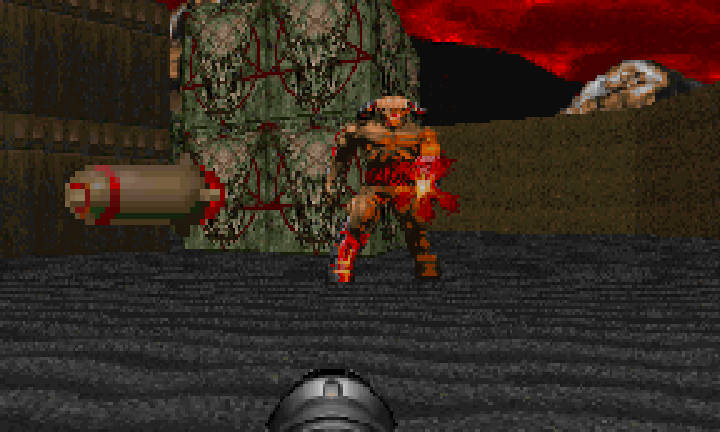
Mechanically it’s not much different than another enemy. But its hulking size, devastating rockets, guttural roar, and acting as the second chapter’s final encounter, elevated it above anything else. It’s the highlight of classic Doom, and I can thankfully say the same about the new one:
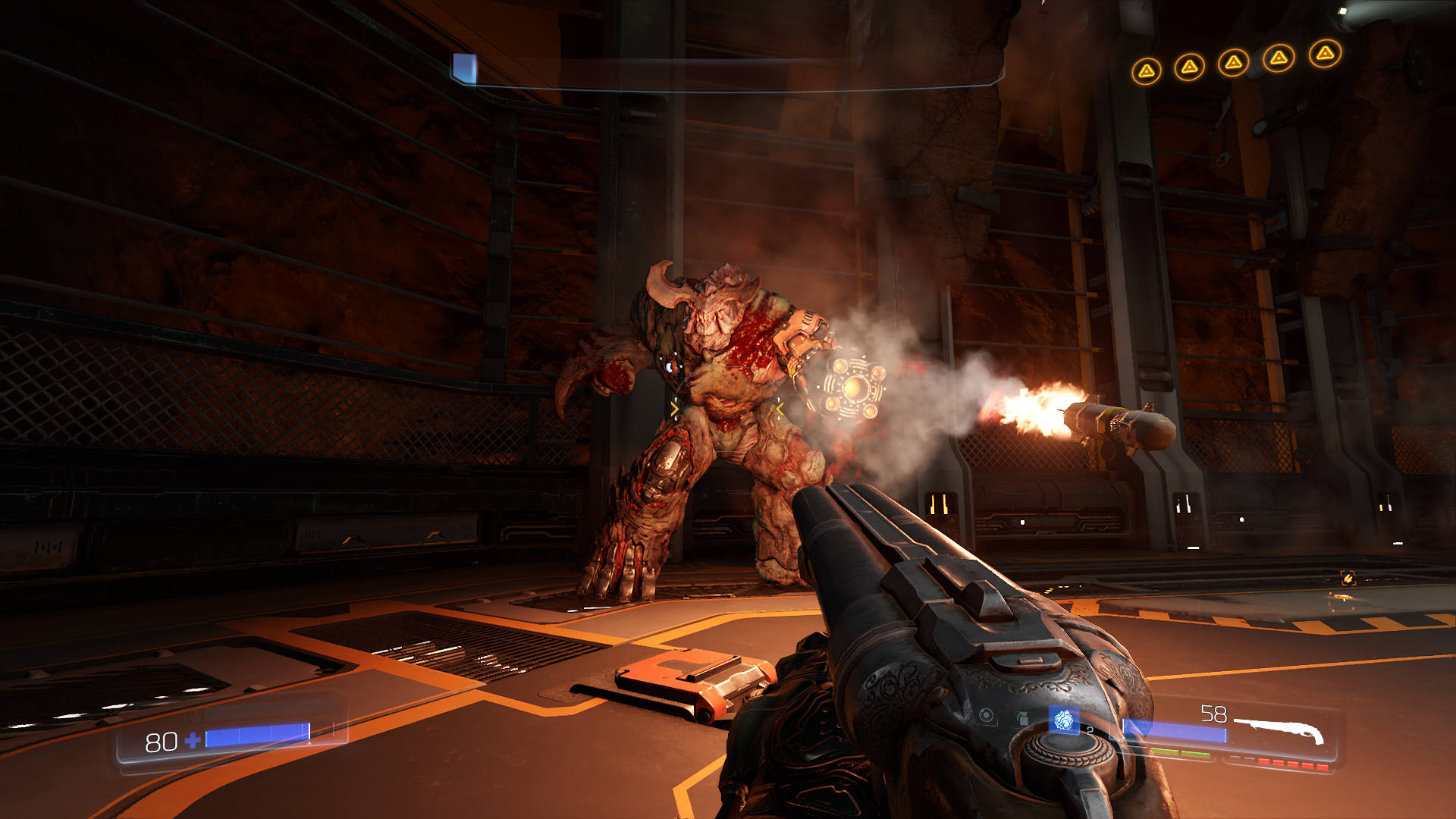
2016’s Cyberdemon is a treat. A full-on boss fight, health bar and everything. It rapidly switches between different attacks, missile barrages, laser beams, charges. Some of its attacks require you to jump or duck to avoid projectiles, and it’s just FUN. It was the first time in eons an FPS felt game-y, and fell in love with it. The boss fight of course, though a big hulking monster is neat as well.
Also I must note this: 2016’s Cyberdemon fight would feel right at home in a Ratchet & Clank game. There’s just something about its framing, size, and telegraphed attacks that brings me back to that series’ boss fights.
The Cyberdemon is the first of game’s three bosses, and all of them are exquisite. Each one tests the player’s skills, reactions, and gamesense. They all have you juggling between throwing damage and avoiding attacks, and they’re all remarkably fun.
My issue is monsters is that they… Mechanically blend together in my mind. In classic Doom they all had specific roles which sometimes overlapped, but here, where they’re mostly equally agile, I feel like you lose something. I can’t really put it into words. It’s like they have a little less focus.
There’s also the issue of enemies seemingly disappearing in the environment. There’s not much in the way of making enemies stand out, and they have a habit of blending in with their environment and completely disappearing down flank routes. There shouldn’t be moments in combat where you’re running in circles looking for a single demon.
In regards to the Cyberdemon, I have a minor complaint. At that part of the game you’re on Mars and trying to get back to Hell. Samuel Hayden informs you that there’s an archaeological specimen which contains the way back to hell, chuckling to himself for some unknown reason.
This thing with a way back into Hell? It’s the Cyberdemon. It would’ve made for a better reveal had Hayden not randomly mentioned ‘oh yeah it’s the Cyberdemon mate’ two minutes before the fight. That, and the trailers showed it breaking down the massive doors..
Story & writing
In regards to the original Doom, there’s an iconic quote from id co-founder & tech wizard John Carmack:
Story in a game is like story in a porn movie. It’s expected to be there, but it’s not important.5
The classic Doom did have a story, loosely told in the instruction manual, and text blurbs at the end of each chapter. You could infer bits and bobs from the environment of levels, but let’s be real: it’s only really set dressing.
Doom 2016 takes a familiar approach. Yeah the story is there and it provides context for wherever you go, but it’s not the be-all and end-all, shooting takes priority. It’s mostly delivered in voice calls while exploring & fighting, with the occasional cutscene break.
The game also has a whole of hidden lore & story, locked away in secret notes & encyclopaedias. They’re not important, but they make for great flavour text. I’ve only ever skimmed over a few bits. If I don’t care about the story to actually talk about what happens, what can I say about notes I can’t care to read?
My only big issue with the story and how it’s delivered comes down to the moments where the game stops. I remember many excruciating moments where one of two physical characters monologues for eons. In reality, there are three moments, and they only last for 2 minutes tops.
I think it’s a shame how Doomguy’s reaction to Hayden’s justifications were to shut him up in the beginning. I wish there was an option to just turn around and storm out of the room – and be delivered a brief voice message about what to do instead of sit about and do nothing.
Oh. Only realising I’ve neglected to mention he’s named The Doom Slayer. It’s cool. It’s all part of getting you hyped up to be in his shoes. The whole bit in the beginning with Oliva’s hologram being worried about you? Creative Director Hugo Martin took key inspiration from this Robocop moment, wanting you to be hyped up about how strong you are.
Also while I’m here I also haven’t mentioned VEGA. He’s6 just a helpful little AI fella who provides flavour text on the world. He’s someone in the world you can attach yourself to who’s a lot less concerned for company property than Hayden. Everyone likes him.
Something to note: this game is steeped in black humour, mostly from the UAC being surprisingly up-front about the whole Hell business. You’ll be going about your business and an information hologram will gladly chime in that they’re opening the gates of Hell with the key to the future.
Don’t really have much to say. I like Doom 2016 because you don’t have to worry about the story.
Old staples
Doom 2016 says sod it to regenerating health, reloading, and all that faff. Again it’s not 1:1 with classic Doom, but it takes all the good stuff. Health packs, armour kits, explosive barrels. It’s nice to see Doom celebrate its heritage.
Artistry
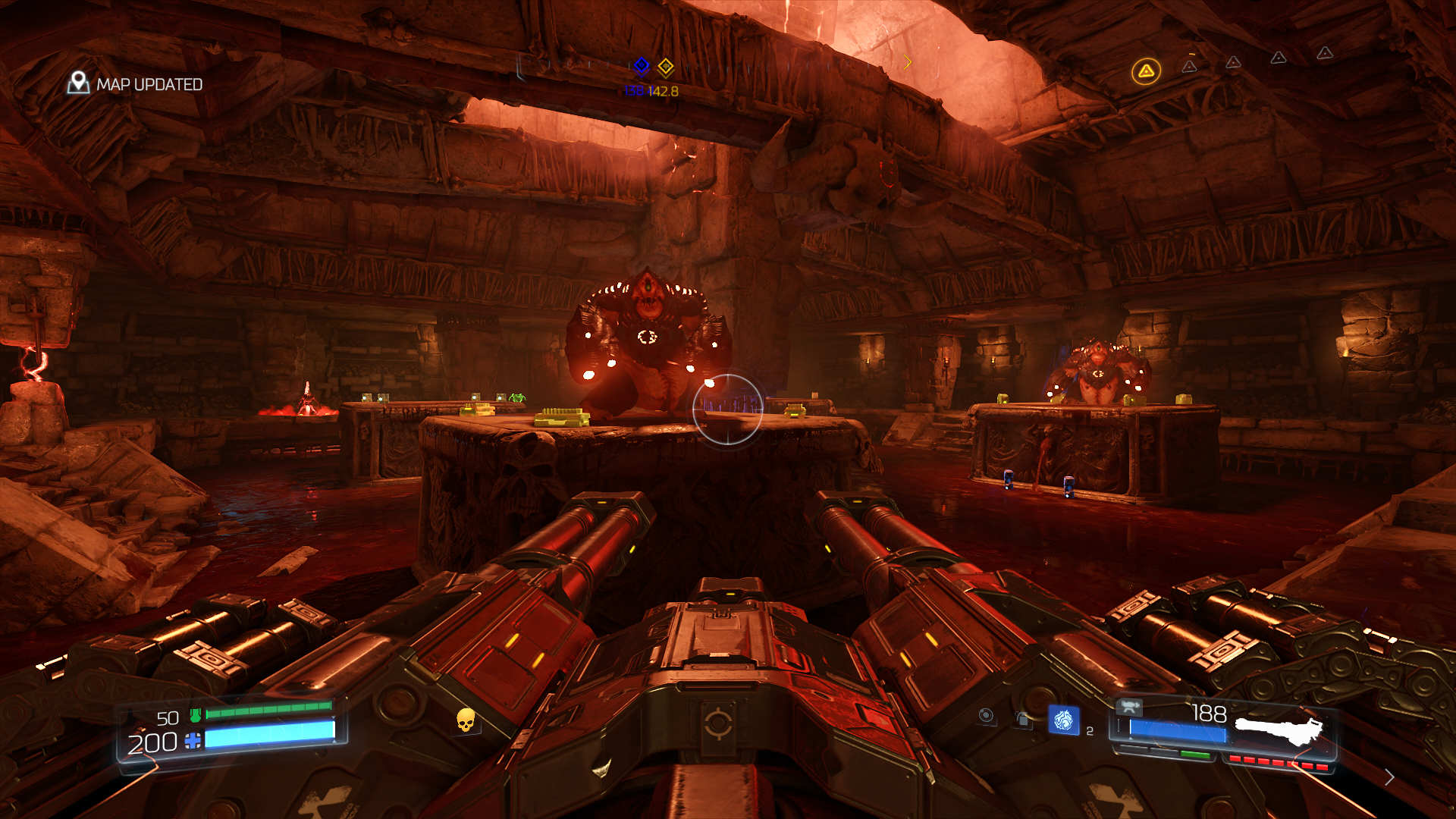
This game looks beautiful. Yeah there’s a bit of texture pop-in and some props have tiny texturemaps, but I wouldn’t knock off any points. There are so many moments where you’re presented with a landscape that looks phenomenal – and even when you’re not, the game’s lighting and materials are amazing. Guns look nice and shiny, particle effects are perfect, and monsters just look perfect.
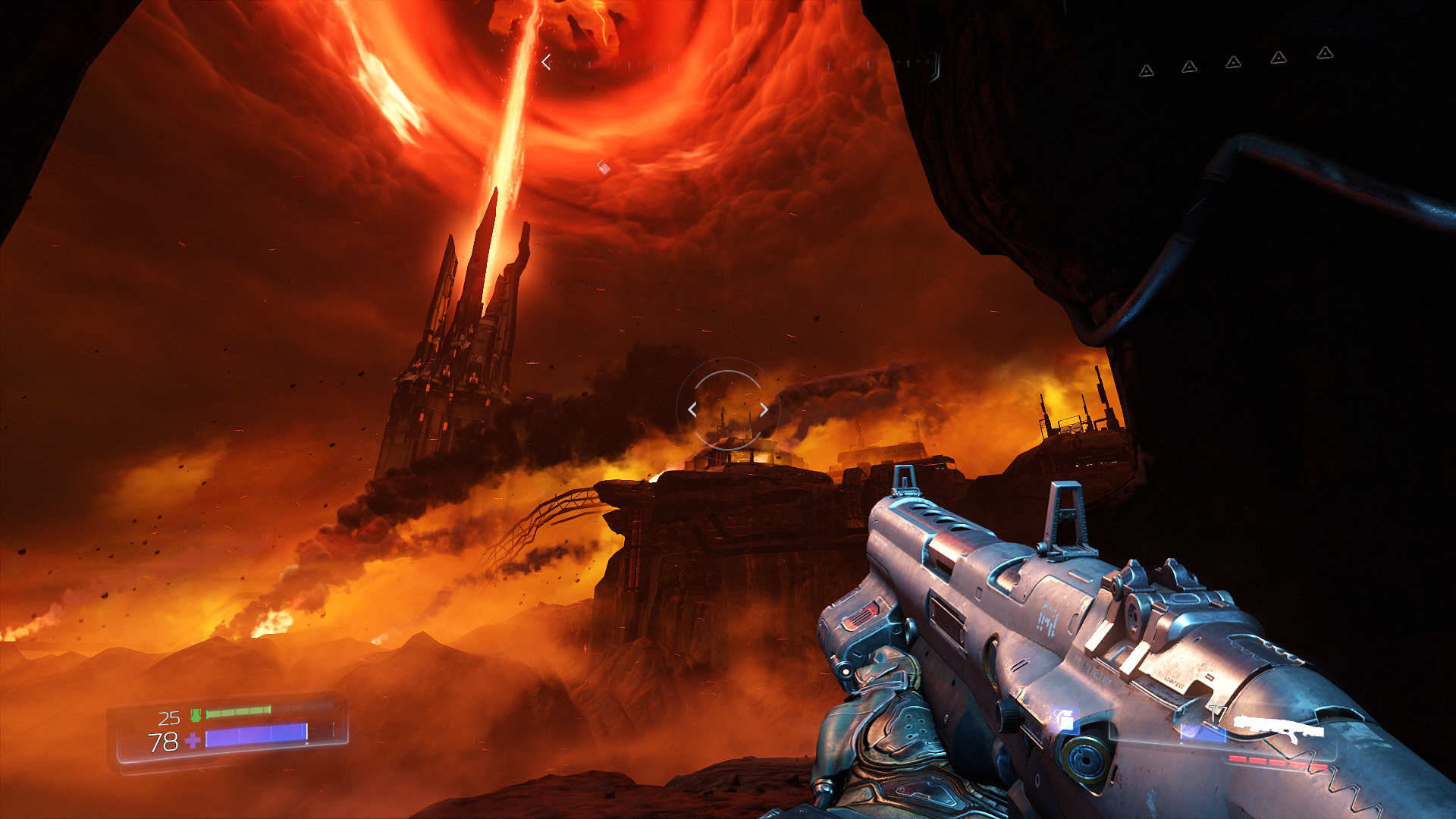
I have no idea how the id engineers did it, but id Tech 6 not only looks amazing, but it runs like butter throughout. I still can’t believe how optimised this game is. 10 years ago I had a failing mid-range GPU and even that could run the game on high settings. Mental.
The music
And of course, there’s the music. If this blog post was limited to two words, they’d be the music. If you ask anyone what makes Doom 2016 click, it’s the music. It’s that important that I have to say it again: the music.
Hot off the heels of his oppressive industrial sound for Wolfenstein: The New Order, Mick Gordon absolutely blessed this game with a killer soundtrack. Bass tones throb, guitars shred, and even a chainsaw breaks through the mix. Mick’s work is meticulous, and it breaks my heart that I can’t quantify how much I gush over it in text.
The notable track is obviously BFG Division. A simple riff, a killer hook, backed up with some analogue synths – all set to overdrive. You could throw someone through a guillotine and they’d still have the urge to start headbanging.
Damnation hits you like brick in waves, one minute it’s panicked, next a thudding noise overload, and then out of the blue develops into a hellish choir (see also: Dakhma).
Flesh & Metal is sick. Guitar strikes pierce through jittery synths, striking fear before losing itself in paranoia, breaking out in noise.
Even if you don’t want to go through the faff of playing Doom 2016, do yourself a favour and listen to the soundtrack.
The other stuff
SnapMap
As much as I’ve been replaying Doom in preparation for this, I admittedly didn’t touch SnapMap – the game’s own kinda-level maker, co-developed by Escalation Studios. Actually, I don’t think I touched it after a week of the game’s release.
I think everyone had the same experience with SnapMap. You tried it out and found it frustrating. There wasn’t much you could do with the prefab map/corridor/arena layouts, the enemy limit was too strict (presumably a console limitation), and while there was a deep logic & scripting system… You probably couldn’t wrap your head around it.
I know I’m a bit of a git for writing it off. I’m sure fans have made some interesting & enjoyable levels over the last decade, it’s just that I honestly have no interest in them.
I’ll give them this: it was ambitious. Classic Doom thrived because of its modding & level editing scene, so I can’t fault them for wanting to throw us a bone.
Multiplayer
Did you know that to this day, computer networks still dedicate port 666 to Doom? That’s how big its multiplayer was. And with this game, it was something else they wanted to try and capture.
Co-developed by Certain Affinity, 2016’s multiplayer is… Different. It’s Doom, but weirdly merged with Halo and Call of Duty (two titles the devs have experience with).
The core gameplay is built off of Doom 2016’s and at its heart it’s an arena shooter – but your arsenal is limited to two weapons and a single piece of equipment. For whatever reason, the multiplayer features not only a Call of Duty loadout system, but its entire progression is inspired by it too.
Don’t want to use the default loadouts? Level up to unlock custom loadouts. Want to use a new weapon in your custom loadout? Level up to unlock it. Want your avatar to have cool armour with different colours? Level up to unlock them – or complete challenges.
The gameplay is simple: you scour the map, pick up armour and health, and get in skirmishes with other players. There’s a fairly long time-to-kill unless you rush in like an idiot.
While you’re limited to two weapons, you get a few more which occasionally spawn in around the map – namely the Gauss Cannon and BFG. Powerups from the main game (and a few new ones!) also spawn in, as well as a powerup that turns you into a demon – stomping about and blasting enemies as the Revenant is a thrill. It’s these respawning boosts which give it that arena shooter edge, and also help to concentrate the chaos in a single area at a time.
Also it’s not just deathmatch. The multiplayer contains a diverse mix of game modes. I have fond memories of Warpath, which plays like a king of the hill mode, but the point moves around the map. It’s a blast, forcing you to learn all the flank routes on each map, and when you’re on the point you’re constantly fighting for it.
Also a cool thing about the multiplayer, it has weapons & equipment not in the base game. The most notable being the Static Rifle – it charges as you move, doing more damage the more it’s charged up. It was bloody lethal. Also the Personal Teleporter saved my arse countless times – throw it somewhere hidden, and if you’re getting beat up, zap yourself back to a safe space.
(If you ask me though, the basic Shotgun was the best weapon. It put out decent consistent damage, and it’s alt-fire grenade was great for finishing someone off!)
Ultimately most people bounced off the multiplayer. It was weird, slow, and just… It’s not Doom! You should be allowed to have more than two weapons at a time. I can’t fault them for that
Personally, I enjoyed the multiplayer mode for what it was. It was no Quake 3, but it was fun enough. I used to regularly top score, and I got to the point where I’d unlocked most of the equipment, but then they did something stupid: they introduced paid DLC packs.
One stupid decision put me off playing the multiplayer again: they introduced paid DLC. This immediately fractured the playerbase as new maps, weapons, and demon transformations were became locked behind a paywall. A year later they apparently unlocked all the DLC content for free, but by then the multiplayer was a distant memory to me.
I did manage to sneak a few games in while writing this post, but I had a few snags. Firstly, they reset everyone’s progress a few years back – so all those weapons and armour pieces I had unlocked were gone. I couldn’t fully enjoy the multiplayer as I had limited time, and I was restricted to the few things I could unlock. It really put a damper on everything.
The second problem is that which plagues every multiplayer game. Over time most people move on, leaving only the die-hards who’ve mastered the game in and out. To be fair I didn’t find this much of a problem, I could hold my own to a degree, but I definitely got a good slapping. If anything, I’m surprised that people still play this at all!
My ultimate conclusion to the multiplayer is that… It’s alright. It’s not amazing, but it’s far from the worst thing you’ll experience. It might not be Doom or Quake 3, but it’s alright for what it is. Just a shame you have to play a ton to unlock everything.
I wouldn’t remotely let it influence my thoughts on the rest of the game… And blimey, I wrote a lot for something I’m telling you not to care about.
Overall
Doom 2016 has a weird spot in my noggin. It’s tied to the hype I had for it on release, and how I felt ten years ago: invulnerable in a world that couldn’t get any worse.
Do I think it’s a great game? Yes, and again it’s a solid 8/10. Do I find it a flawed game which meddles with what ought to be the core experience? Yes. But I have this thing every time I replay Doom:
The first half of the game I find to be a bit of a slog. It’s enjoyable, but its missing something. I get bogged down in finding secrets, doing challenges, and getting upgrades. And then I get to the second half.
I don’t know how, I don’t know why, but like clockwork it ticks every time. I start to gel with the game. I start to feel it. What truly elevates this game is when you hit a state of flow, and from that point forward it’s plain sailing. Even though I’m lucid about my criticisms, I don’t care. It’s Doom, it’s here, and it’s fun.
Ten years down the line, would I recommend it? Of course I would. It’s careless demon blasting fun, and that’s all that matters.
-
Surprisingly, no footage from this event emerged until the /noclip documentary! ↩︎
-
Someone, somewhere out there must have pre-ordered Wolfenstein: TNO just for the Doom beta, then waited 2 years for a multiplayer playtest that lasted less than a week. ↩︎
-
I must note here that the 3D slow-mo sections of the trailer come from the game’s credits – itself a last-minute passion project lead by animator Brett Patton. The description in his upload tells the whole story. It was clear how passionate the team was for the game, and that passion bled through in the leaked trailer. ↩︎
-
I was really hoping to go a single paragraph without a tangent, but here we are. Rip and tear was an oft-ridiculed line from a hilariously bad Doom comic. It was this big dumb in-joke in the community, and its inclusion gave fans a massive laugh. It’s crazy to think that nowadays the line has completely ascended and became part of the modern Doom identity. ↩︎
-
From David Kushner’s Masters of Doom, pg 128. While people still quote this, it’s worth mentioning that this was back in the early 90s, way before games had extensive narratives. Also check the book out, it’s a fantastic read about the founding & rise of id Software! ↩︎
-
AMAA – Assigned Male At Activation. ↩︎
